




























































For Pakistani workers planning to work abroad, preparing the correct documents is one of the most important steps before departure. Employers, recruitment agencies, immigration authorities, and foreign governments may require different documents to confirm a worker’s identity, qualifications, employment history, and eligibility.
A proper overseas document verification process helps ensure that the information provided by a worker is accurate and acceptable for employment and immigration purposes. Missing, incorrect, or unverified documents can cause delays in recruitment, visa processing, or deployment.
This guide explains the major documents Pakistani workers may need and how the verification process generally works.
What Is Overseas Document Verification?
Overseas document verification is the process of checking employment, educational, professional, identity, and other relevant documents before a worker is recruited or deployed to another country.
The purpose is to confirm that documents are genuine, accurate, and meet the requirements of the employer and destination country.
Depending on the job and country, verification may involve checking:
- Educational certificates
- Technical qualifications
- Professional licenses
- Experience certificates
- Employment history
- Passport details
- Identity documents
- Medical documentation
- Employment contracts
- Visa-related paperwork
The exact requirements can vary depending on the destination country, profession, employer, and type of employment.
Why Is Document Verification Important for Pakistani Workers?
Proper document verification protects both workers and international employers.
For workers, accurate documentation can help prevent problems during recruitment and visa processing. It also allows employers to confirm that a candidate has the qualifications and experience required for the position.
For employers, verification helps reduce the risk of hiring candidates with inaccurate qualifications or employment records.
Some important benefits include:
- Reducing documentation errors
- Confirming candidate qualifications
- Supporting visa processing
- Improving recruitment transparency
- Helping employers select suitable candidates
- Preventing delays caused by missing paperwork
- Supporting compliance with applicable employment requirements
Documents Required for Overseas Employment
The documents required can differ depending on the country and job. However, Pakistani workers commonly need several categories of documentation.
1. Passport
A valid passport is one of the most important documents for international employment.
Workers should check that:
- Their name is correctly spelled.
- Date of birth is accurate.
- Passport validity meets the relevant requirements.
- Pages are available for visas and immigration stamps.
Workers should also make sure that the information on their passport matches their other official documents.
2. National Identity Documents
Depending on the recruitment and destination-country requirements, workers may need identity documentation to establish their personal details.
Any differences between identity documents and other paperwork should be addressed before the recruitment or visa process progresses.
3. Educational Certificates
Educational qualifications may be required for professional, technical, and specialized positions.
These may include:
- School certificates
- Diplomas
- College qualifications
- University degrees
- Technical education certificates
- Professional qualifications
Employers may verify these qualifications to confirm that the candidate meets the educational requirements of the vacancy.
4. Experience Certificates
Experience documentation can be particularly important for skilled workers.
An experience certificate may confirm:
- Previous employer
- Job title
- Employment period
- Main responsibilities
- Relevant technical experience
Workers should ensure that their experience documents contain accurate information and are consistent with the employment history provided during recruitment.
5. Technical and Professional Certificates
Workers applying for specialized positions may need technical or professional certifications.
Examples can include qualifications related to:
- Electrical work
- Welding
- Plumbing
- HVAC
- Mechanical work
- Construction
- Engineering
- Healthcare
- Information technology
- Automotive services
Some professions may have additional licensing or regulatory requirements in the destination country.
6. Medical Documentation
Medical examinations may be required before overseas employment depending on the destination country and employment category.
Workers should complete medical requirements through the appropriate channels and keep copies of relevant documentation where permitted.
Medical requirements can differ significantly between countries, so workers should follow the instructions provided by the relevant authorities, employer, or authorized recruitment organization.
7. Employment Contract
The employment contract is another important part of the documentation process.
Workers should carefully review information such as:
- Job title
- Salary
- Working hours
- Contract duration
- Benefits
- Accommodation
- Transportation
- Leave entitlement
- Place of employment
The contract should accurately reflect the agreed employment conditions.
Overseas Document Verification Process
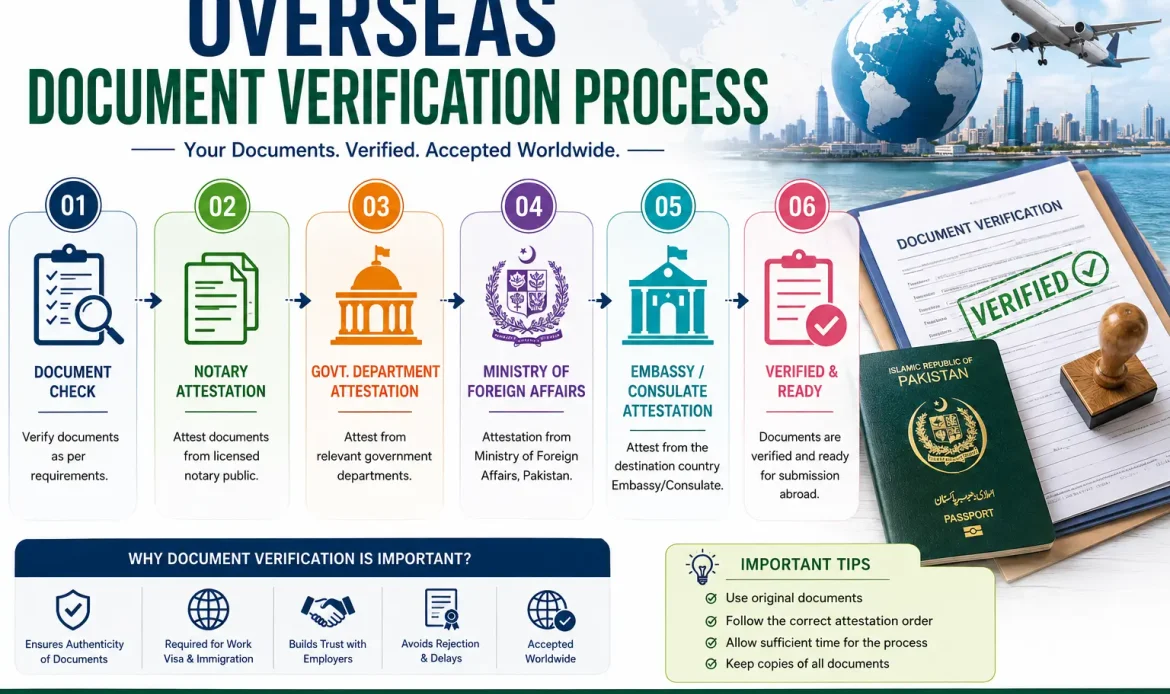
The exact process differs by destination and job category, but Pakistani workers can generally prepare for verification through the following steps.
Step 1: Collect All Required Documents
Start by creating a complete document file based on the employer and destination-country requirements.
Keep original documents safe and prepare copies where required.
Step 2: Check Personal Information
Compare names, dates of birth, passport numbers, and other important information across your documents.
Even a small spelling difference can create complications during verification or visa processing.
Step 3: Verify Educational Qualifications
If your job requires educational qualifications, make sure your certificates are genuine and can be verified through the relevant educational or issuing authority.
Additional attestation or authentication may be required depending on the destination country.
Step 4: Verify Employment Experience
Make sure experience certificates accurately represent your previous employment.
Employers may contact previous organizations or use other verification methods to confirm employment history.
Step 5: Complete Required Attestation
Some documents may require attestation or authentication before they can be accepted abroad.
The responsible authority and process can vary according to the document and destination country. Workers should therefore confirm current requirements before submitting documents.
Step 6: Complete Employer and Visa Requirements
After the documentation has been checked, the employer or authorized recruitment partner can proceed with the relevant employment and visa procedures.
Workers should provide documents only through legitimate and authorized channels.
Document Attestation vs. Document Verification
These terms are sometimes used interchangeably, but they can refer to different processes.
Document verification generally means confirming that information or qualifications are genuine and accurate.
Document attestation generally refers to certification or authentication by an authorized authority so that a document can be accepted for a particular official purpose.
A worker may need one or both processes depending on the destination country and type of employment.
Common Document Verification Problems
Pakistani workers can face delays when documents contain errors or do not meet the required standards.
Common problems include:
Incorrect Personal Information
Differences in names, dates of birth, or other personal details can create verification issues.
Missing Documents
A worker may have the required qualification but fail to provide the certificate or supporting document requested by an employer or authority.
Unverified Qualifications
Some employers may require qualifications to be verified before confirming employment.
Incomplete Experience Records
Experience certificates without sufficient employment details may not provide enough information for verification.
Expired Passport
An expired or soon-to-expire passport can cause problems during international employment and visa processing.
Inconsistent Employment History
Information provided on a CV should be consistent with experience certificates and other employment records.
How Workers Can Prepare for Overseas Employment
Good preparation can make the overseas employment documents process easier.
Workers should:
- Start collecting documents early.
- Keep original documents secure.
- Prepare clear copies where required.
- Check spelling and personal information.
- Maintain accurate employment records.
- Keep educational and technical certificates organized.
- Confirm destination-country requirements.
- Use authorized recruitment channels.
- Avoid submitting false or altered documents.
- Keep copies of important paperwork.
Workers should also ask their employer or recruitment agency for a clear checklist before starting the documentation process.
Role of Recruitment Agencies in Document Verification
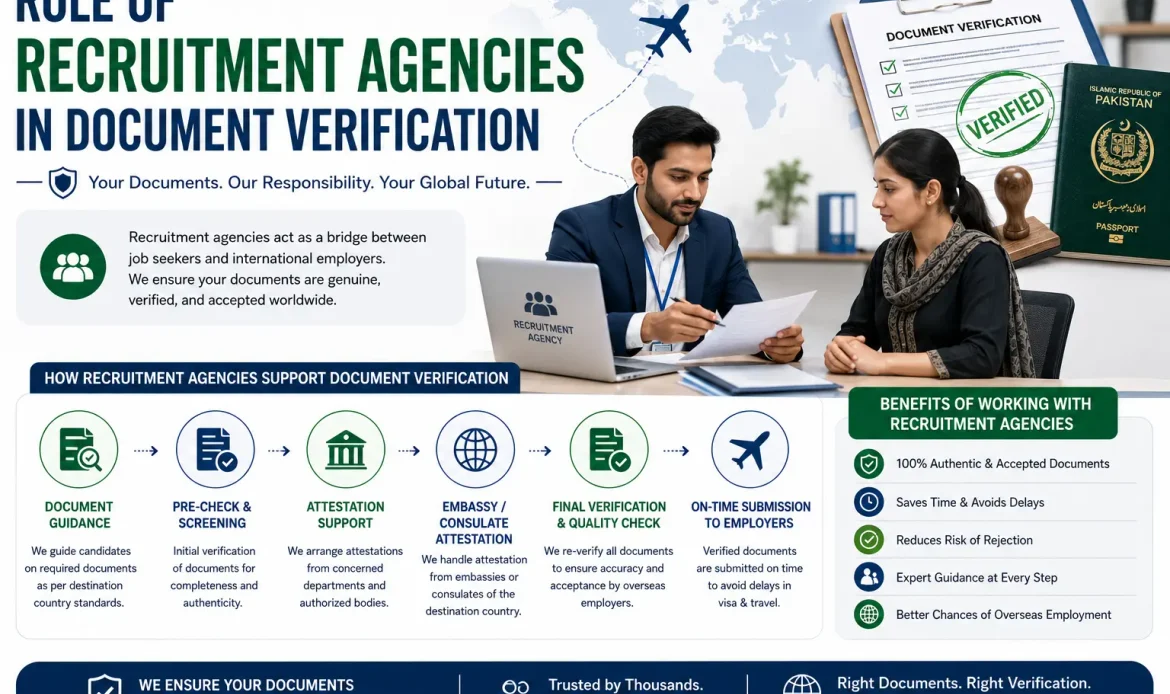
Professional recruitment agencies can help coordinate several stages of the overseas recruitment process.
Depending on their services and authorization, they may assist with:
- Candidate screening
- Document collection
- Initial document checking
- Candidate interviews
- Skill assessment
- Medical coordination
- Employment documentation
- Visa processing support
- Pre-departure arrangements
However, workers should always verify the credentials of a recruitment agency before paying fees or submitting important documents.
Tips for International Employers Hiring Pakistani Workers
Employers recruiting Pakistani workers should establish a clear documentation process from the beginning.
A practical approach is to:
- Provide a detailed job description.
- Clearly identify qualification requirements.
- Specify required documents.
- Verify educational and professional qualifications.
- Confirm employment experience.
- Conduct technical assessments where appropriate.
- Check applicable immigration requirements.
- Maintain accurate recruitment records.
- Use legitimate recruitment channels.
- Provide workers with clear employment terms.
A structured approach can make employment document verification more efficient while reducing recruitment-related problems.
Overseas Document Verification Checklist
Before moving forward with overseas employment, Pakistani workers can use this basic checklist:
| Document | Check |
|---|---|
| Passport | Validity and personal information |
| Identity documents | Correct personal details |
| Educational certificates | Qualification and authenticity |
| Experience certificates | Employer and employment period |
| Technical certificates | Relevant skills and qualifications |
| Professional license | Validity where applicable |
| Medical documents | Required examination completed |
| Employment contract | Salary and job conditions |
| Visa documents | Correct information and requirements |
| Attested documents | Completed where required |
This is a general checklist. The actual requirements should always be confirmed for the specific destination country, employer, and profession.
Final Thoughts
Proper documentation is an essential part of international employment. For Pakistani workers, completing overseas document verification before deployment can help reduce errors, support visa processing, and give employers greater confidence in a candidate’s qualifications and experience.
Workers should prepare their documents early, verify important information, follow applicable attestation requirements, and use legitimate recruitment channels.
Whether you are a skilled technician, engineer, healthcare professional, construction worker, IT specialist, or another type of professional, organized documentation can make the overseas employment process smoother and more transparent.