



























































Returning home after working in the Gulf does not have to mean starting your professional life from zero. For many Pakistani professionals and skilled workers, years spent working in Saudi Arabia, the United Arab Emirates, Qatar, Oman, Kuwait, or Bahrain can become a strong foundation for future career growth.
International employment often provides valuable technical knowledge, workplace discipline, safety awareness, communication skills, and experience with international standards. When these skills are presented correctly, they can help workers compete for better employment opportunities after returning to Pakistan.
This Gulf Returned Workers Career Guide 2026 explains how Pakistani workers can use their overseas experience, improve their professional profiles, explore new opportunities, and build a successful career after returning home.
What Is Gulf Returned Workers Career?
Gulf Returned Workers Career refers to the career opportunities, employment options, and professional development paths available to Pakistani workers after completing employment in Gulf countries.
A worker may return with several years of practical experience in construction, engineering, manufacturing, healthcare, hospitality, logistics, facility management, information technology, or technical trades. This international exposure can give returnees an advantage when applying for positions in Pakistan or preparing for another overseas opportunity.
The key is to present previous Gulf employment as valuable professional experience rather than simply listing the country where the worker was employed.
Why Gulf Experience Matters for Gulf Returned Workers Career
Working in the Gulf can expose Pakistani employees to modern equipment, professional management systems, workplace safety procedures, multicultural teams, and international quality standards.
These experiences can become important assets when developing a Gulf Returned Workers Career in Pakistan.
Some of the most valuable skills gained through overseas employment include:
- International work experience
- Technical and practical skills
- Workplace safety knowledge
- Professional discipline
- Equipment handling
- Team management
- Communication
- Problem solving
- Time management
- Exposure to international workplace standards
For Gulf returned skilled workers, these capabilities can create opportunities with local businesses, multinational companies, contractors, factories, and service providers.
Career Opportunities for Gulf Returned Workers
The right career path depends on an individual’s qualifications, previous occupation, technical skills, certifications, and professional goals.
Some potential career opportunities for Gulf returned workers include construction, engineering, manufacturing, hospitality, logistics, healthcare, technical services, and management positions.
Construction and Engineering
Pakistani workers who have worked on Gulf construction projects may have experience with commercial buildings, residential developments, infrastructure projects, industrial facilities, and maintenance operations.
Potential positions include:
- Civil supervisor
- Site engineer
- Electrical technician
- Mechanical technician
- Quantity surveyor
- Welder
- Plumber
- HVAC technician
- Safety officer
- Construction supervisor
Previous Gulf experience can be particularly valuable when applying for positions that require practical knowledge and familiarity with workplace safety.
Manufacturing and Industrial Employment
Workers with experience in factories and industrial environments may find opportunities in Pakistan’s manufacturing sector.
Their background may be relevant to machinery operation, maintenance, production, quality control, technical supervision, and industrial safety.
For workers planning their Gulf Returned Workers Career, identifying industries where previous experience can be transferred is an important first step.
Hospitality and Service Industry
Hotel and restaurant professionals who have worked in the Gulf may have experience serving international customers and following professional hospitality standards.
Possible positions include:
- Chefs
- Restaurant supervisors
- Waiters
- Housekeeping supervisors
- Front-desk staff
- Kitchen assistants
- Catering professionals
This international customer-service experience can help candidates compete for positions with hotels, restaurants, catering companies, and other service businesses.
Logistics and Transportation
Drivers, warehouse workers, fleet professionals, and logistics coordinators may also explore opportunities after returning to Pakistan.
Experience with international logistics operations, delivery procedures, vehicle management, warehouse systems, and workplace safety can support career development in this sector.
Healthcare
Qualified healthcare professionals with Gulf experience may explore opportunities with hospitals, clinics, diagnostic centers, and other healthcare organizations, subject to applicable licensing and professional requirements.
Their international experience may help demonstrate familiarity with professional procedures and multicultural work environments.
How to Use Gulf Work Experience for Career Growth
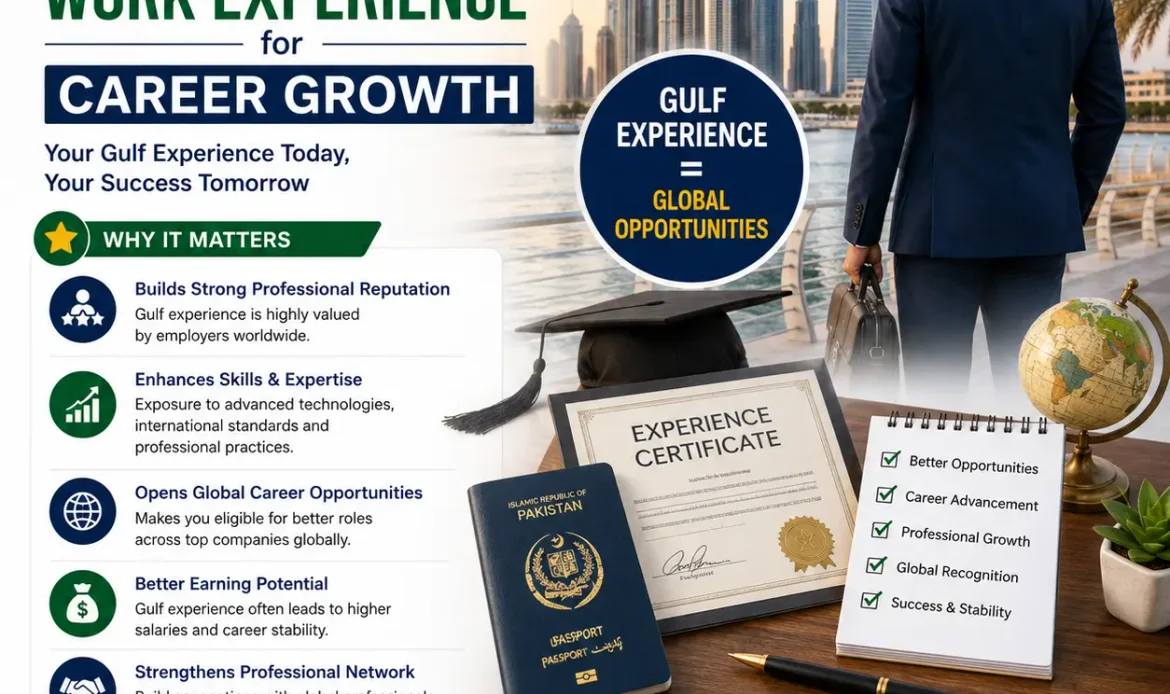
One of the most important parts of building a successful Gulf Returned Workers Career is learning how to present overseas experience effectively.
Simply writing “Worked in Saudi Arabia for five years” does not tell an employer what the candidate achieved.
Instead, workers should explain their responsibilities, technical skills, projects, and accomplishments.
For example:
Basic CV statement:
“Worked as an electrician in Saudi Arabia.”
Stronger CV statement:
“Worked as an electrician on commercial projects, handling electrical installation, maintenance, troubleshooting, preventive maintenance, and workplace safety procedures.”
The second example communicates practical abilities and gives the employer a better understanding of the candidate’s experience.
Update Your CV With International Experience
A professional CV is one of the most important tools for Gulf return workers in Pakistan.
Your CV should clearly mention:
- Job titles
- Companies worked for
- Countries of employment
- Employment duration
- Main responsibilities
- Technical skills
- Professional certifications
- Equipment or systems used
- Major projects
- Achievements
- Languages
- Relevant training
Workers should focus on achievements rather than only listing duties.
For example, if you supervised employees, mention the approximate team size. If you worked on a major construction project, explain your responsibilities and contribution to the project.
A well-structured CV can make international experience easier for Pakistani employers to understand.
Highlight Transferable Skills
A successful Gulf Returned Workers Career is not always limited to the same job that a person performed overseas.
Many skills gained abroad can be transferred to different industries and positions.
These may include:
- Leadership
- Team management
- Communication
- Time management
- Problem solving
- Customer service
- Quality control
- Workplace safety
- Equipment handling
- Technical troubleshooting
For example, a worker who previously supervised a construction team may be able to apply for supervisory positions in manufacturing, facility management, or other technical environments.
This can expand the career options for Gulf returnees.
Improve Skills With Additional Training
International experience is valuable, but workers should continue developing their skills after returning home.
Additional courses and recognized certifications can improve employment prospects and help professionals qualify for higher-level positions.
Depending on the profession, useful training areas may include:
- Health and safety
- Technical trades
- Computer applications
- Digital skills
- Project management
- Equipment operation
- Quality management
- English communication
- Industry-specific certifications
Additional training can make skilled workers returned from Gulf more competitive in Pakistan’s job market.
It can also help workers prepare for future international employment opportunities.
Explore Jobs for Gulf Returned Workers
After updating a CV and reviewing professional skills, workers should begin searching for suitable vacancies.
Potential sources include:
- Recruitment agencies
- Company career pages
- Online job portals
- Professional networking platforms
- Industry associations
- Local employment programs
- Personal professional networks
Instead of applying for every available vacancy, candidates should focus on positions that match their previous experience and transferable skills.
Searching for jobs for Gulf returned workers can also help candidates identify employers who understand the value of international experience.
Build a Strong Professional Network
Networking can play an important role in developing a Gulf Returned Workers Career.
Workers should reconnect with:
- Former colleagues
- Local employers
- Recruitment professionals
- Contractors
- Industry experts
- Business owners
- Professional associations
Former colleagues may know about vacancies, while recruitment professionals can provide information about suitable positions.
Workers can also use professional networking platforms to showcase their overseas experience, certifications, projects, and technical abilities.
How Gulf Experience Can Improve Career Opportunities
International experience can differentiate a candidate from applicants who have only worked in local environments.
Employers may value candidates who understand:
- International workplace culture
- Safety practices
- Quality standards
- Time-sensitive projects
- Multicultural teamwork
- Customer expectations
- Technical procedures
Understanding how Gulf experience can improve career opportunities allows workers to communicate their strengths more effectively during applications and interviews.
Instead of focusing only on where they worked, candidates should explain what they learned and how those skills can benefit a new employer.
Prepare for Local Job Interviews
After spending several years abroad, workers may need to adjust their approach to the Pakistani employment market.
Before attending an interview, candidates should research:
- The company
- Job responsibilities
- Expected salary
- Industry trends
- Required skills
- Company culture
- Career progression opportunities
During the interview, candidates should explain how their overseas experience can help solve workplace problems and improve productivity.
For example, instead of simply saying, “I worked in Dubai for five years,” explain the projects handled, responsibilities managed, equipment used, and skills developed during that period.
Career Options for Gulf Returnees
There is no single path for people returning from the Gulf.
Depending on their experience and goals, workers may consider:
- Returning to the same profession in Pakistan
- Moving into a supervisory position
- Joining a multinational company
- Starting a small business
- Taking additional professional training
- Working with a recruitment or manpower organization
- Exploring another overseas employment opportunity
- Moving into teaching or technical training
The best option depends on an individual’s professional background, financial objectives, skills, and long-term plans.
A clear career assessment can help workers choose the path that best matches their experience.
Employment Support for Gulf Returned Workers
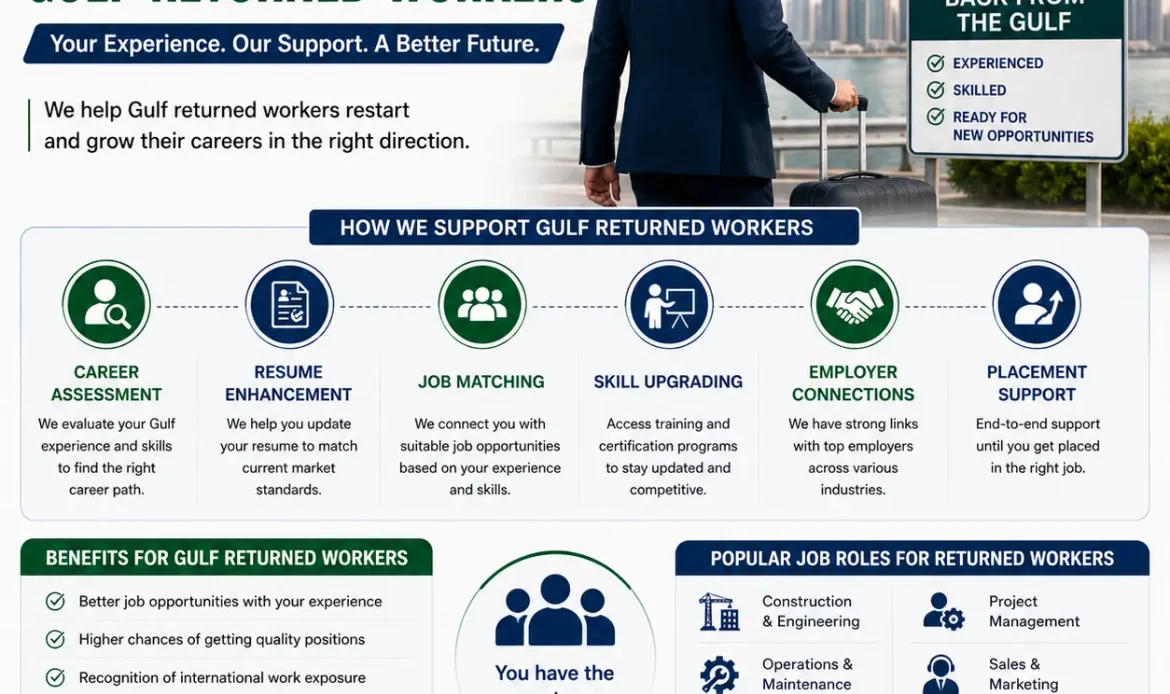
Some returnees may need help identifying suitable opportunities or presenting their skills to potential employers.
Employment support for Gulf returned workers may include:
- Career counseling
- CV improvement
- Skill assessment
- Job matching
- Professional registration
- Training guidance
- Employment opportunity information
Such support can be useful for workers who have spent several years outside Pakistan and are unfamiliar with current hiring trends.
Professional guidance can also help returnees understand how their overseas experience can be positioned for local employers.
Consider Entrepreneurship After Returning Home
Employment is not the only option for experienced returnees.
Some workers may be able to use their technical knowledge and professional contacts to start a small business or provide specialized services.
For example:
- An electrician could start an electrical services business.
- A mechanic could establish a vehicle repair workshop.
- A construction supervisor could launch a contracting service.
- A hospitality professional could start a catering business.
- A logistics professional could explore transportation services.
Entrepreneurship may be suitable for workers who have strong technical knowledge, industry connections, business skills, and sufficient resources.
Common Career Mistakes Gulf Returnees Should Avoid
Workers can sometimes make mistakes when transitioning back into the Pakistani job market.
1. Using an Outdated CV
An old CV may not properly communicate current technical skills and international experience.
2. Focusing Only on Job Titles
Employers want to understand responsibilities, skills, achievements, and results—not just previous job titles.
3. Ignoring New Training
Industries continue to change. Updating technical and professional skills can improve employability.
4. Applying for Every Job
Targeted applications are generally more effective than sending the same CV to unrelated vacancies.
5. Undervaluing International Experience
Gulf employment can provide valuable technical and professional exposure. Workers should communicate these strengths confidently.
6. Depending Only on Personal Contacts
Networking is useful, but workers should also explore recruitment agencies, online job platforms, companies, and professional networks.
A Practical Gulf Returned Workers Career Plan
A structured plan can make the transition from overseas employment to local career development easier.
Step 1: Evaluate Your Experience
List your previous jobs, responsibilities, technical skills, certifications, projects, and achievements.
Step 2: Update Your CV
Create a professional CV that highlights international experience and measurable accomplishments.
Step 3: Identify Your Target Industry
Choose industries and positions that match your qualifications and previous work experience.
Step 4: Improve Your Skills
Take relevant courses or obtain certifications where they can strengthen your professional profile.
Step 5: Build Your Network
Reconnect with former colleagues, employers, recruiters, contractors, and industry professionals.
Step 6: Apply Strategically
Focus on vacancies where your international experience gives you a genuine advantage.
Step 7: Prepare for Interviews
Practice explaining how your overseas experience, technical knowledge, and professional skills can benefit a potential employer.
Step 8: Continue Learning
Career growth does not stop after finding a new job. Continue developing skills and monitoring new opportunities.
Gulf Returned Workers Career: Turning Experience Into Opportunity
Returning from the Gulf does not mean that professional growth has to stop. The technical knowledge, workplace discipline, international exposure, and practical experience gained overseas can become valuable career assets.
The strongest Gulf Returned Workers Career approach is to identify these strengths, document them clearly, improve relevant skills, and connect them with the requirements of today’s employers.
Whether a worker chooses local employment, entrepreneurship, additional training, or another international opportunity, previous Gulf experience can provide a strong foundation for future growth.
Final Thoughts
For Pakistani workers, returning from the Gulf can be an opportunity to reassess professional goals and create a stronger career path. International employment can provide technical knowledge, transferable skills, workplace discipline, and exposure to professional standards.
By updating their CVs, improving their qualifications, building professional networks, and targeting relevant vacancies, Gulf returned workers can turn their overseas experience into meaningful career growth.
A successful Gulf Returned Workers Career is not simply about finding another job. It is about using years of international experience to move toward better opportunities, stronger professional development, and long-term career success.